How EMI Shielding Protects Cell Phones
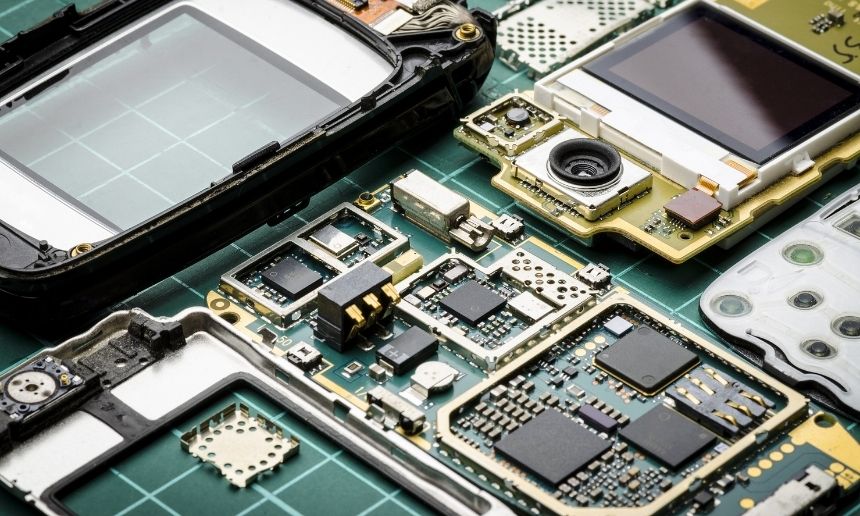
Electromagnetic interference (EMI) can affect any type of electronic device, including your cell phone. EMI is the reason your cell phone will garble conversations and drop calls, and, in extreme circumstances, it can lead to a loss of data and system failure. To function in this technology-filled world, your phone needs a solid defense against electromagnetism. In this guide, we’ll explain how electromagnetic interference works and how EMI shielding protects cell phones against unwanted interference.
What is EMI (Electromagnetic Interference)?
Your electronic devices depend on the routing of electrons around circuits to operate. For routing to occur, the electrons need to be accelerated. Whenever charged particles like electrons are accelerated, electromagnetic fields are generated. “EMI” describes what happens when an electromagnetic field or another external source disrupts or adversely affects the normal functioning of an electronic circuit or device. There are national and international standards that regulate how much electromagnetic energy a device can emit. The easiest way to ensure compliance with these standards is to build devices with EMI shielding.
How Can I Protect My Cell Phone Against EMI?
Most smartphones are built with EMI shielding. EMI shielding protects cell phones by reducing the amount of electromagnetic waves coming from the phone and blocking incoming interference. This way, your phone is less likely to affect surrounding devices, and surrounding devices are less likely to affect your phone.
The shielding isn’t applied to the entire phone. An array of digital chips inside the phone is shielded instead, which allows the phone to function normally while still receiving adequate protection. The shielding protects the parts of your phone that control wireless LAN, radio frequency, and Bluetooth. An overlooked benefit of EMI shielding is that it helps create space inside the phone without compromising the device’s performance. While most modern smartphones come equipped with EMI shielding, older devices with worn-out or no EMI shielding materials at all might still be susceptible to electromagnetic interference.
Deep Coat specializes in EMI coating and shielding for a wide range of industries and devices. Connect with one of our team members to discuss how our innovative coating and shielding processes can help protect your devices.
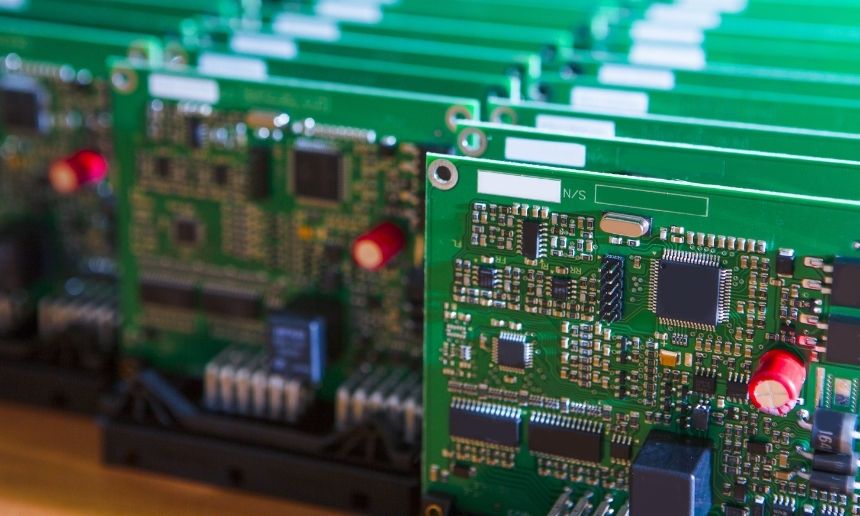
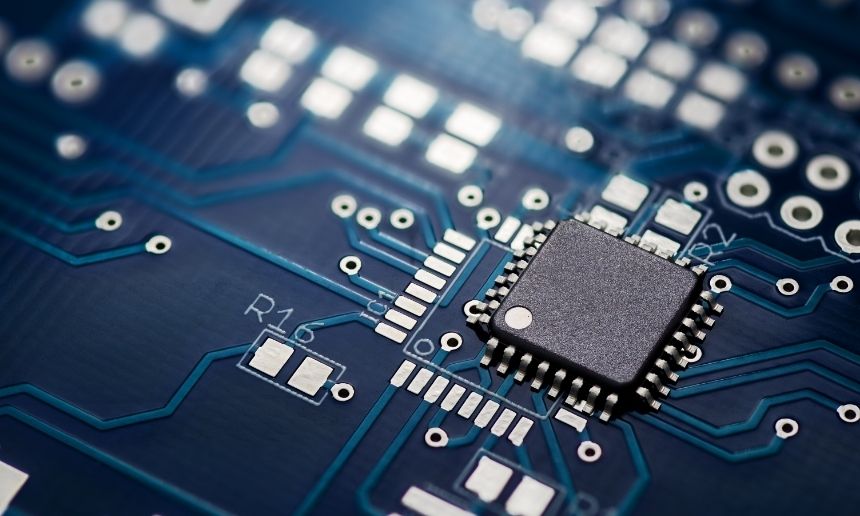
EMI is everywhere. Without the proper precautions, it can wreak havoc on your devices, including your PCB. EMI, or electromagnetic interference, is electromagnetic energy that disrupts the signaling in an electronic device through radiation or induction. It doesn’t take much to create EMI. All you need is energy and an antenna. All electronic devices create EMI, and all electronic devices can be affected by it—but there are ways to mitigate its effects. Mitigating EMI starts with the design of your PCB. Let’s check out some tips for reducing EMI in PCB designs, so you can stop EMI in its tracks.
The Ground Plane
A ground plane is an electrically conductive surface that connects to electrical ground. In PCBs, the ground plane is an area of copper foil. It connects to the power supply ground terminal and acts as a return path for current from different components on the board. The bigger the ground plane, the less you’ll have to deal with electrical noise, interference through ground loops, and crosstalk. When the digital circuits switch state, current pulses will flow from the active devices into the ground circuit. A high impedance will lead to a voltage drop, which can result in significant noise. By providing a larger conducting area, you can cut down on interference. Other methods for optimizing your ground plane include:
- Using a multi-layer board
- Using split grounds cautiously
- Connecting split ground planes at a single point
- Connecting bypass or decoupling capacitors to the ground plane
The Trace Layout
Another tip for reducing EMI in PCB designs is to focus on the trace layout. A trace is a conductive path. When a circuit is active, it contains flowing electrons. Crossing or bending the trace layout could lead to the formation of an antenna. When you’re designing your trace layout, make sure to:
- Avoid sharp right-angle bends
- Keep your signals separate
- Keep return paths short
- Isolate high-speed components
- Keep analog circuits separate from digital circuits
EMI Shielding
Most devices produce EMI. To cut down on the negative effects, you’ll want to focus on electromagnetic compatibility, or designing your circuit to prevent disruption by shielding it. By shielding your devices, you can protect your receivers from external electromagnetic signals, or prevent a stronger signal from escaping and interfering with other electronics. An EMI shielding coating can cover vulnerable PCB elements, along with connectors and cables between PCBs.
Using dual-fire or our patented quad-fire vacuum metalization process, Deep Coat can create precise, effective PCB shield designs. If you’re looking for a way to protect your devices against EMI, contact us to discuss our custom PCB EMI shielding services.
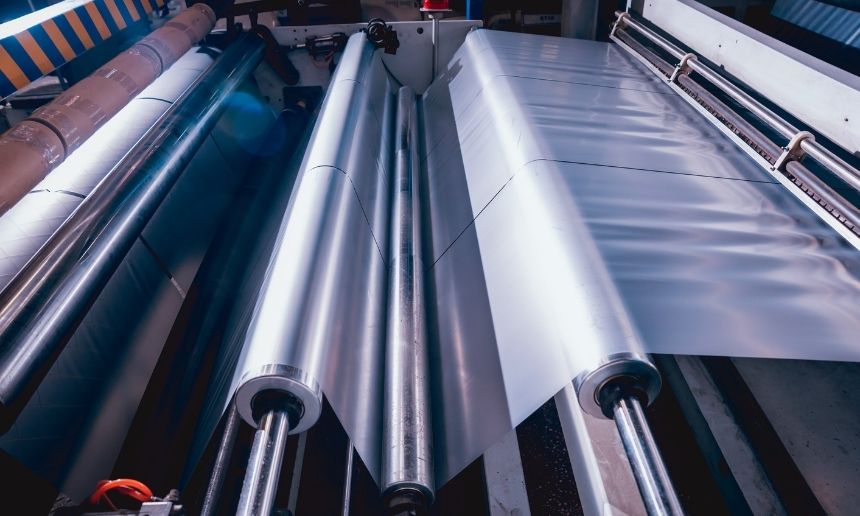
Ever wondered what the best methods for metalizing plastic are, or if metalizing your plastic is worthwhile? Here’s what to know about metalizing plastic, including its benefits and the most effective methods and processes for coating it.
The Benefits of Metalizing Plastic
Plastic can be metalized for both aesthetic and mechanical purposes. Vacuum metalizing plastic has several benefits. When metalized, plastic takes on a glossy, reflective appearance, along with practical qualities such as abrasion resistance and electrical conductivity. Metal-coated plastic is used in similar applications to metal parts. It tends to have a lower weight, a higher resistance to corrosion, controllable conductivity levels, and a lower manufacturing cost. There are several common methods of metalizing plastic, two of which are arc and flame spraying and vacuum metalization.
Plastic Metalization Processes
Another important thing to know about metalizing plastic is how it’s done. Let’s look at some of the most common methods and processes used to metalize plastic.
Arc and Flame Spraying
In basic flame spraying, a hand-held device is used to spray a layer of metallic coating on the substrate. A metallic powder is heated and melted by an oxygen and gas-fueled combustion flame. The mixture is accelerated and released as a spray, which coats the plastic component. This method of metalizing has a high deposition rate and thick, durable coatings, but tends to produce results that are porous and rough. Flame spraying can be used to apply metalized coatings to a specific area, which is useful when working with complex or unusually shaped parts. Arc spraying is, at its core, flame spraying, but with a different power source. Instead of depending on a combustion flame, arc spraying derives its energy from an electric arc.
Vacuum Metalizing
Vacuum metalizing is another efficient process for metalizing plastic. Before vacuum metalizing occurs, the plastic undergoes a pretreatment. This can be done chemically, mechanically, or with low-energy plasma. Since metals tend to bond poorly with polymers, the pretreatment ensures the metal properly adheres to the plastic. Next, a metal, typically aluminum, is evaporated. The vapor from the metal condenses onto the substrate, leaving a thin layer of metal coating. To prevent oxidation, the entire process takes place within a vacuum chamber. Vacuum metalized plastic is used in a wide range of applications—from automotive interior parts to certain types of foils.
Deep Coat’s innovative vacuum metalizing process makes coating your materials—plastic or otherwise—quick, simple, and efficient. If you’re thinking about vacuum metalizing plastic components, get in touch with us so we can discuss and plan your next metalizing project. We can also provide additional services such as surface pretreatment and decorative overcoating, so don’t hesitate to reach out.